Each week, I’ll choose a poem and read it aloud. Like this.
(Don’t you love the way the soundvial fills up with the sanguinary words? I fiddled with the HTML to get the bloodiest hue I could find: B40404. Where I see blood, Martha Stewart sees Ladybugs. I guess Martha wouldn’t want to sell blood as part of her LivingTM craft collection. And yet what is blood if not Living (TM) paint, wine, words?)
At the end of the week I’ll make another recording of myself, but this time reciting the poem by heart. I’m interested to see how the inflections of the piece might change when delivered by heart rather than off the page. What will a week of chewing on the poem as I go about my daily rounds reveal?
If anything of interest emerges, I’ll tell you about it on here.
Megg Hewlett, the first person I ever did a Read Me Something You Love with, and essentially the progenitor of the whole project, sent me a poem off the back of a conversation we’d had over pricey tea and some so-so Konditor & Cook cakes
(“But all the hype suggested something different,” Megg sighed, bemoaning that this was not an adequate birthday treat for me, though the conversation more than made up for it.)
The title immediately set off an Elliot Smith song in my head:
A fructiferous juxtaposition considering that Smith sings of hopelessness (made even more plangent by the knowledge that he allegedly took his own life in 2003, by stabbing himself through the heart with a kitchen knife) whereas Whyte sings resolutely of hope.
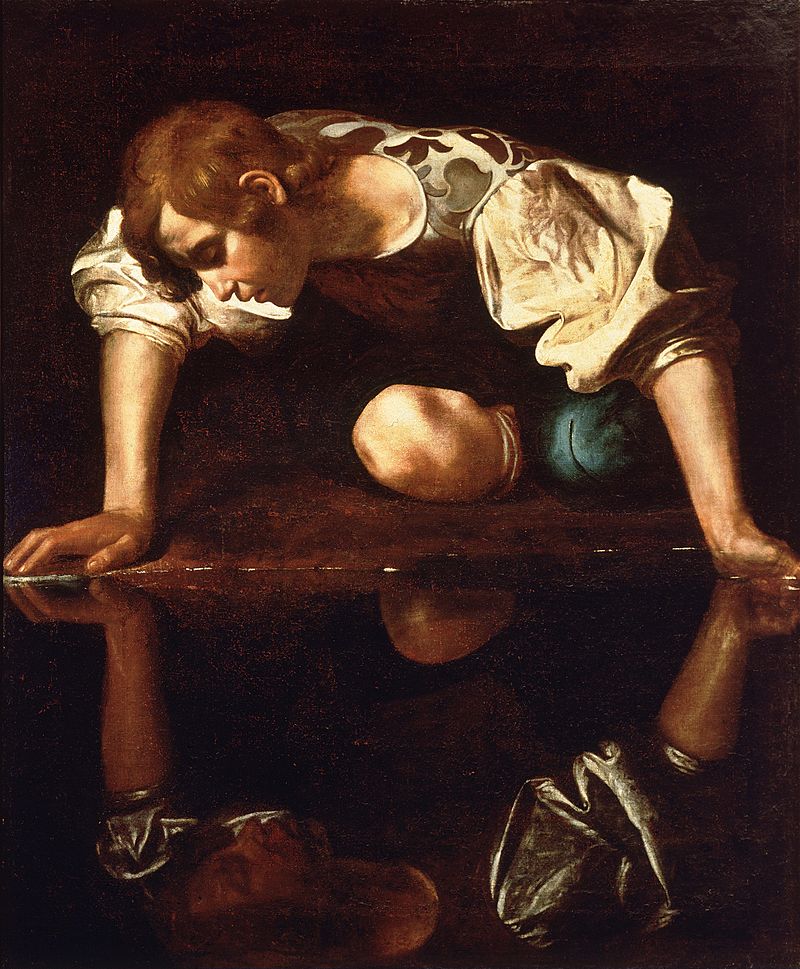
Hopelessness, the song seems to suggest, often lies in the lack that reveals itself when casting one’s mind backwards and forwards through our own prefigured life-span as part of a comparative exercise. The deficiency reflected back at us, Narcissus-like.
If the self-reflection is shouting a reminder of “everything we’re supposed to be” based on past daydreams and future aspirations, the blue songbird on your shoulder will keep singing on your shoulder its dirge of depression: everythingmeansnothingtome, everythingmeansnothingtome, everythingmeansnothingtome.
Whyte keeps us focused in the present. There is no looking back, and although he suggests some sort of future “pay-off”, even a preliminary reading of the poem indicates that the everything waiting for us, and more to the point, everything we’re waiting for, can be found right here and now: in the “tiny, hidden” data of our world.
…note
the way the soap dish enables you,
or the window latch grants you freedom.
Alertness is the hidden discipline of familiarity.
I have been carrying around the poem for the last few days copied neatly onto a 5″ x 3″ Correspondence Card, the card starting to feel intimately used as well as useful, on its way to disintegration through repeated folding.
I mainly work on memorizing whilst walking. I’ve even tried taking a step per word, envisaging the sentences cleaving to the rhythms of my body, the walk becoming the poem becoming the walk. I’m not sure if the poem might be drummed or marched into me like this, but I’m giving it a go.
Embodying the words is key. I need to get to the point where I can recite it as naturally and “automatically” as I might the days of the week, or the months of the year. The rhythms need to sink in, sync with breathing, so that the poem becomes a way of focusing and potentially stilling the mind through language for a minute or two, rather than just an anxiety-producing sequence of memory-potholes.
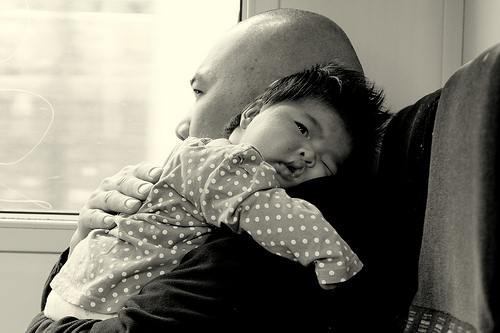
On a train from Mill Hill Broadway, travelling north in search of a walk, I sit opposite a young family. The father has his child resting against the beat of his heart. I watch the tympanic petting of his fingers on the infant’s back. They are clearly both soothed by this interaction.
Surely,
even you, at times, have felt the grand array;
the swelling presence, and the chorus, crowding
out your solo voice.
I take a poem, I learn it by heart. It takes me a long time, I don't have a great memory. But in the learning of the poem, I get to find out all sorts of things about the world and myself. Call it a mindfulness exercise if you like, or a kind of onerous pleasure.
Occasionally I write down some of the stuff I've learnt along the way.

 So this is how I might do it.
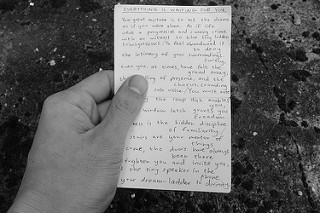 I have been carrying around the poem for the last few days copied neatly onto a 5″ x 3″ Correspondence Card, the card starting to feel intimately used as well as useful, on its way to disintegration through repeated folding.