
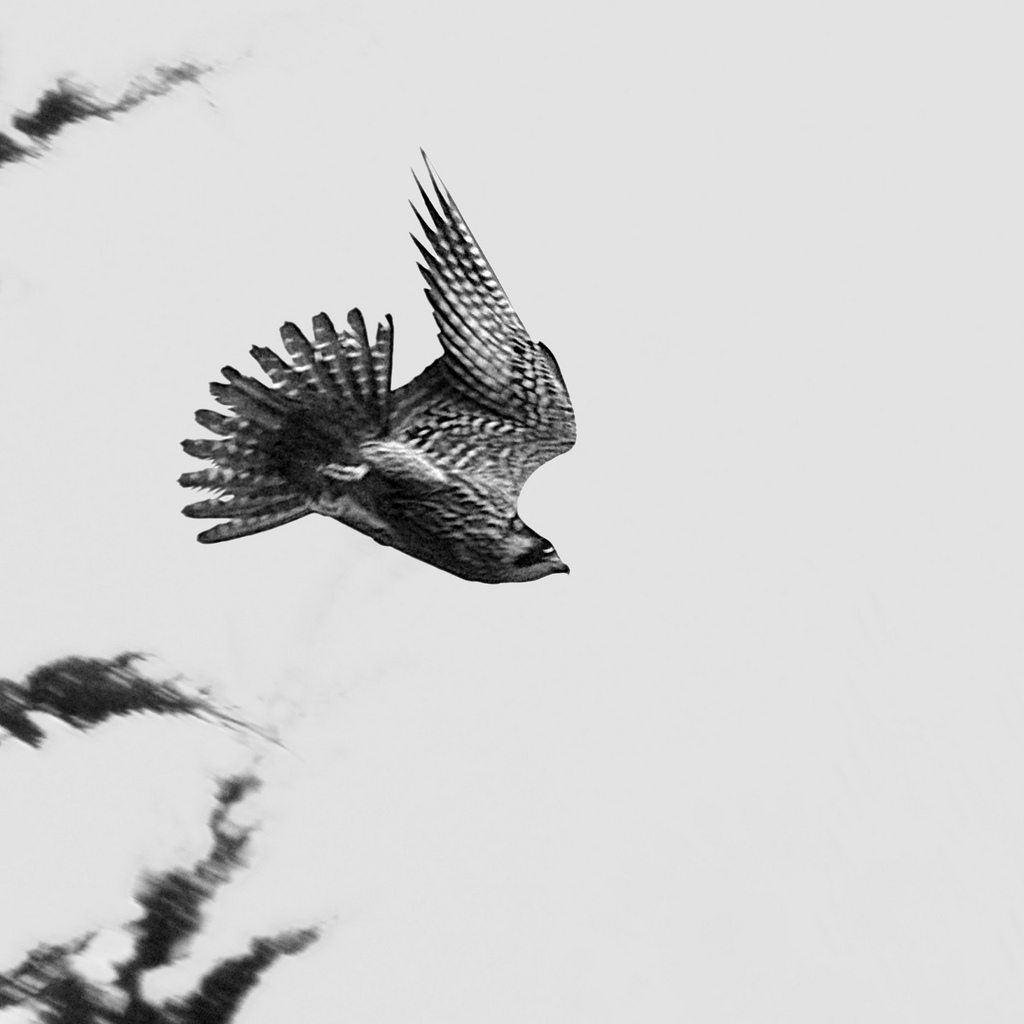
 In the first couple of weeks of my By Heart project, I thought I might return to poems I’ve had a crack at learning before, but never giving the memorization process enough time to bed in.
Incompletion creates a certain if-only dolefulness which may trail after you like an incoherent golem pleading through muddy eyes that you finish what you started.
A poem is a particularly potent gestalt, which becomes clear when you swap a few words around in this quote from Margaret Korb:
A poem, and the learning of, is a completed unit of human experience. It is a unique aesthetic formulation of a whole; it will to some degree involve contact,awareness, attention, and figure formation out of the ground of my experience; it arises out of emergent needs and is mobilized by aggressive energy.
One feels the push and pull of contact, awareness, attention, figure and ground, need, aggression ever-so strongly in Gerard Manley Hopkins’ The Windhover [2].
Here’s a first read-aloud after taking it for a walk around the block a couple of times.
Background soundscape by Jani Hirvonen: http://omhasva.blogspot.co.uk/
I was surprised to discover that some of my previous attempts to learn the poem had left faint paths in the neural circuitry, a kind of introceptive deja-vu.
The art of memory, we know from the ancients, is that of “inner writing”, employing places and images to plant and cultivate our memory gardens [1]. So even a day or two, ten years ago, attempting to learn this poem by heart must have cleared the beginning of the headspace one needs for a poem (or anything else) to take root.
- Google side-servings: Read the Rhetorica Ad Herennium online; Ange Mlinko’s essay on The Windhover; Kwame Dawes on the poem; Carol Rumens (Guardian) essay; selections from Hopkins’ letters ↵
- Constat igitur artificiosa memoria ex locis et imaginibus (“Artificial memory is established from places and images”) writes the unknown author of Rhetorica ad Herennium. “For the places are very much like wax tablets or papyrus, the images like letters, the arrangements and disposition of the images like the script, and the delivery is like the reading.”↵