“this fruition of boredom/the equation of us”

On Saturday afternoon I sat in the balmy sunshine of the Southbank listening to poetry and tweeting as the planet continued to heat to the point of expiration.

Damn fine poetry it was too. And no poetry damner and finer than Rhian Edwards.

What made Edwards utterly compelling and captivating was that she recited every word of every poem. Not a single word read, and so not a single word retrieved by eye from the page a distant-distancing two feet away before making the 10cm journey into her visual cortex, then pumped out of word-hole to the audience where only then we begin making sense of it all with our auditory wetware.
When you learn a poem by heart, the cells of all your body become marinated with that poem. It seems as if the distance between audience and speaker is reduced too.

If that poem is “yours”, then you are no doubt becoming even more marinated in yourself, more YOU, in a Whitmanesque, Singing-The-Body electric kind of way. Every lung-sponge, stomach-sac, bowels sweet and clean in service to that poem. Every armpit, breast-bone, jaw-hinge, freckle, heart-valve consorting to make you feel what the poet felt in the writing and now reciting of her thoughts and sentiments.

It’s altogether special, and I can’t really get enough of it, this marinating of my own cells in poetry. Particularly other people’s poems. I am already far too stewed to add self-expressiveness to the mix, but others people’s “stuff”, learnt by heart dovetails in extraordinary ways with to how I feel, think, and sometimes even act. It’s alchemical.

I also get a kick out of witnessing this alchemy in others, as one rarely can these day, unless you’re a Slam Poetry fundie. And even then: do you always want someone’s inner world microphone-slammed into you? (That is not a rhetorical question. The answer is no.)
This year’s theme for National Poetry Day is ‘Stars’, and so rather cleverly (unintentionally cleverly), a bunch of us have decided to gather together under the stars in the not so sweet and not so clean bowels of gothic Abney Park chapel to recite our favourite poems from the last couple of centuries.

We won’t be reciting work we’ve written (there’s enough of that about), but rather the poems we love, the poems we’ve ingested and set to work within us.

Tickets are £3 and all profits go to one The Reader Organisation‘s Care Leaver Apprenticeship programme.

Do join us: http://byheart.readmesomethingyoulove.com/events/

This piece was written for The National Poetry Day website.
If the power were granted you to break out of your cells (King of The River #1)

Sometimes the words just won’t go in.

I am stuck on the third stanza of ‘King of The River‘.

If the power were granted you
to break out of your cells,
but the imagination fails
and the doors of the senses close
on the child within,
you would dare to be changed,
as you are changing now,
into the shape you dread
beyond the merely human.
A dry fire eats you.
Fat drips from your bones.
The flutes of your gills discolor.
You have become a ship for parasites.

I read a couple of lines. Repeat them again and again. Think I have them. But as soon as I go back to the first two stanzas which are almost “there” (in my head), the third slips away again like that “yard of muscle” we call “fish”, thrashing its way out of my memory’s grasp.

Perhaps the third stanza won’t stick because I’m not sure what Kunitz is trying to say in it. I get the biological-driven quest of the first two, the force of the libido driving through the niceties of thought.

The mind would like things to be just-so before it acts, but things are never just-so. Well, hardly ever.

If the water were clear enough,
if the water were still,
but the water is not clear,
the water is not still…

But what’s happening in the 3rd stanza, Stanley?

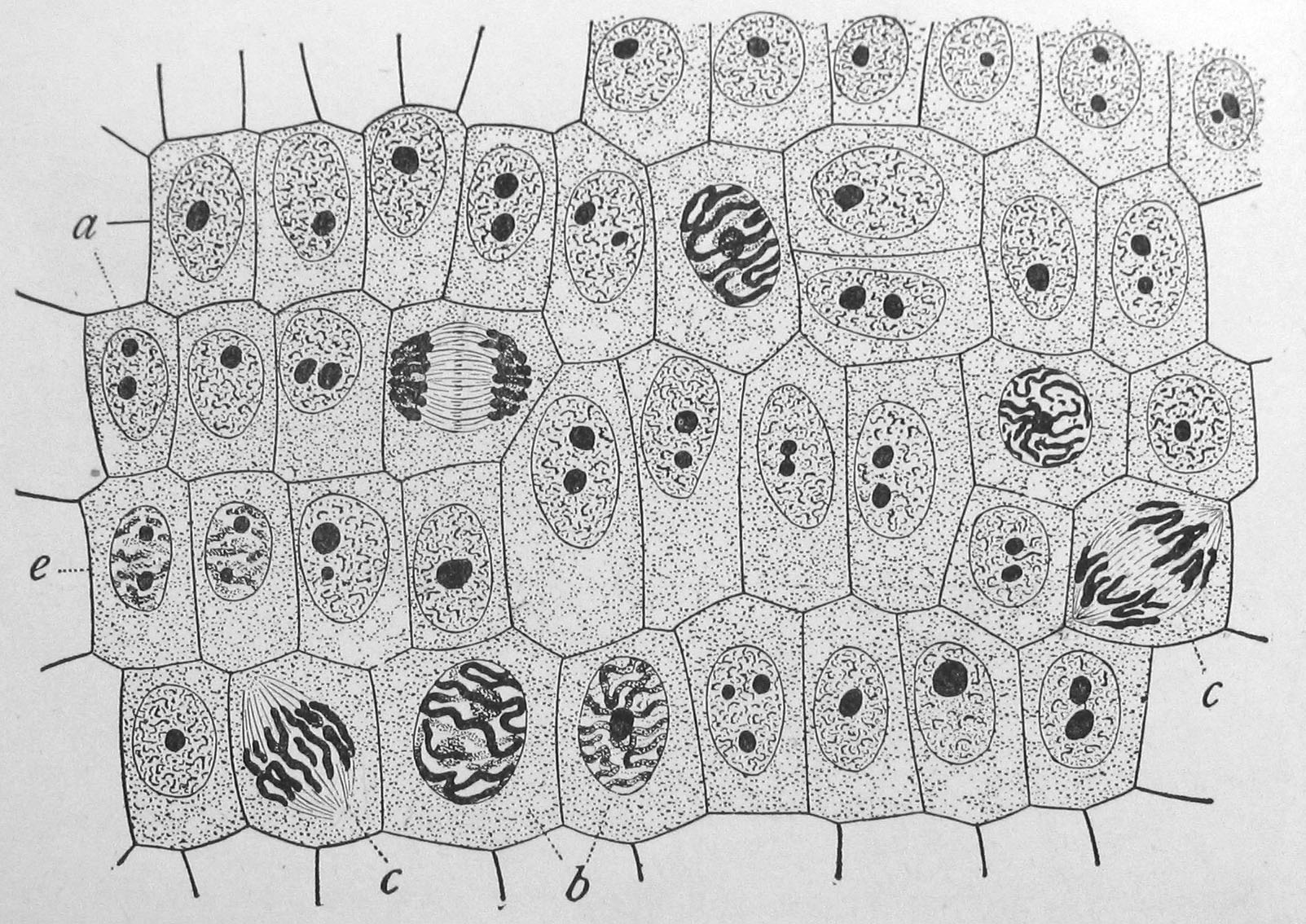
It starts with another biological-denying fantasy: “If the power were granted you/to break out of your cells…”. These being the cells as in the structural and functional units of our organismic life. But equally, other enclosures: the alcoves, sanctuaries and garrets where we think, read, pray and write poems. The mausoleums, vaults, catacombs where we bury ourselves away to live or die. The dungeons, ghettos, stockades, where others put us out of the way.[1]

And what do cells at their most basic level do? Metabolic processes, division, biosynthesis.

To put it simply: stuff is consumed, stuff is processed, stuff is produced. A bit like a blog, or a poem, or a novel. It seems we just can’t help ourselves.

But we also can’t break out of our cells, ourselves, can’t escape the biological hoopla that drives us down rivers studded with hope-dashing rocks, painted “with our belly’s blood”.

And yet. And yet. The suggestion stands that imagination might offer some respite. Unless, and isn’t this the most crushing of recognitions, imagination itself “fails”. What does that failure of the imagination entail? Or rather what does the success of that cell-escaping imagination need? Kunitz seems to be suggesting that imagination requires a sensitivity and wonder to the world around us akin to that of the child, albeit perhaps a mythical child, the inner-infant that plays and screams when it’s excited or sad.

But then he throws in this line about “daring to be changed”, implying that some fork-in-the-river choice need to be made at a certain point. And yet no choice need be made either because we are already “changing now/into the shape you dread/beyond the merely human”.

I take the “merely human” to mean that deluded, immortal sense of ourselves we have, that sense that the cup of tea I’m just about to make will be one of a neverending series of cups, for how could this mere, day-to-day human ritual change?

Until we age, perhaps, sickening, wear out, die. Or experience the death and entropy around us.

A dry fire eats you.
Fat drips from your bones.
The flutes of your gills discolor.
You have become a ship for parasites.

Footnotes    (↵ returns to text)
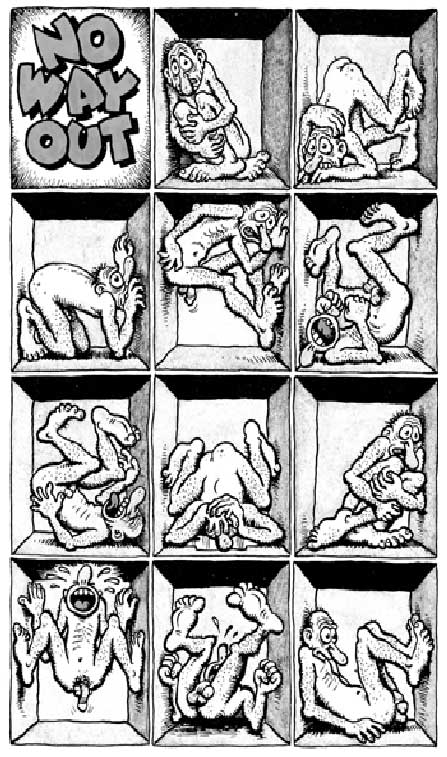
  1. Looking for an image of some cells to use with this post, the ones I find reminds me of that incredibly bleak illustration by Robert Crumb ‘No Way Out’. How lonely, in some way, the human cell! Each one hived off from the other. How lonely the salmon in its bruised and battered quest. Yes, there is union “in the orgiastic pool”, but for the most part, the life journey of this creature is a solo one.

The art of losing’s not (too) hard to master: One Art by Elizabeth Bishop

Every assertion made in this poem is mendacious.

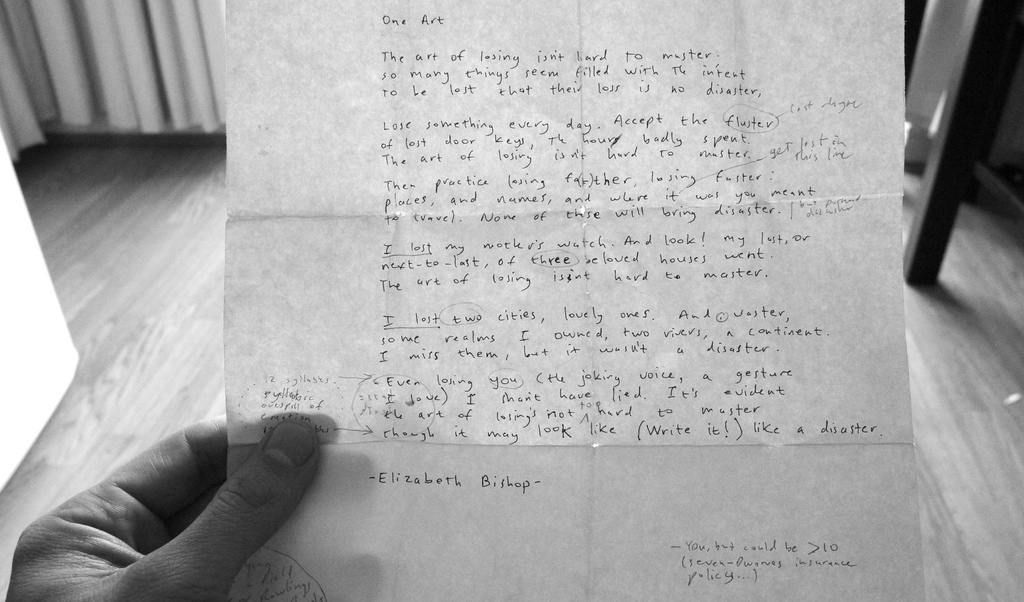
How do I know this? I know this because I have spent a week and a half easing the poem into my head and heart and it all adds up by not adding up.

I know this because when one has finally absorbed not just the words of the poem (“The art of losing isn’t hard to master”), but also its regular, though slightly “off” end-rhymes that both soothe and stall, balancing-unbalancing the ear (master…faster… last,or….vaster….gesture) you know.

And when you know, the poem becomes even more glorious. Glorious because the un-mastering Bishop, the I’m-not-really-OK that sits kvetching in every blithe logical-mastering-positivism, strikes to the very heart of the piece and to human nature itself.

One Art by Elizabeth Bishop

The final proof spills out in that last parenthetical outburst “(Write it!)”, as if language itself has finally refused to have the wool pulled over it’s eyes and lies. It’s also at this point in the poem that the ten/eleven syllable regularity unravels into twelve syllables and four lines. The poem can no longer contain its own platitudes.

Which is dynamite. More powerful than a thousand scarified you-broke-my-heart-and-left-me-for-nowt songs and poems about loss. Even very good ones, like this one.

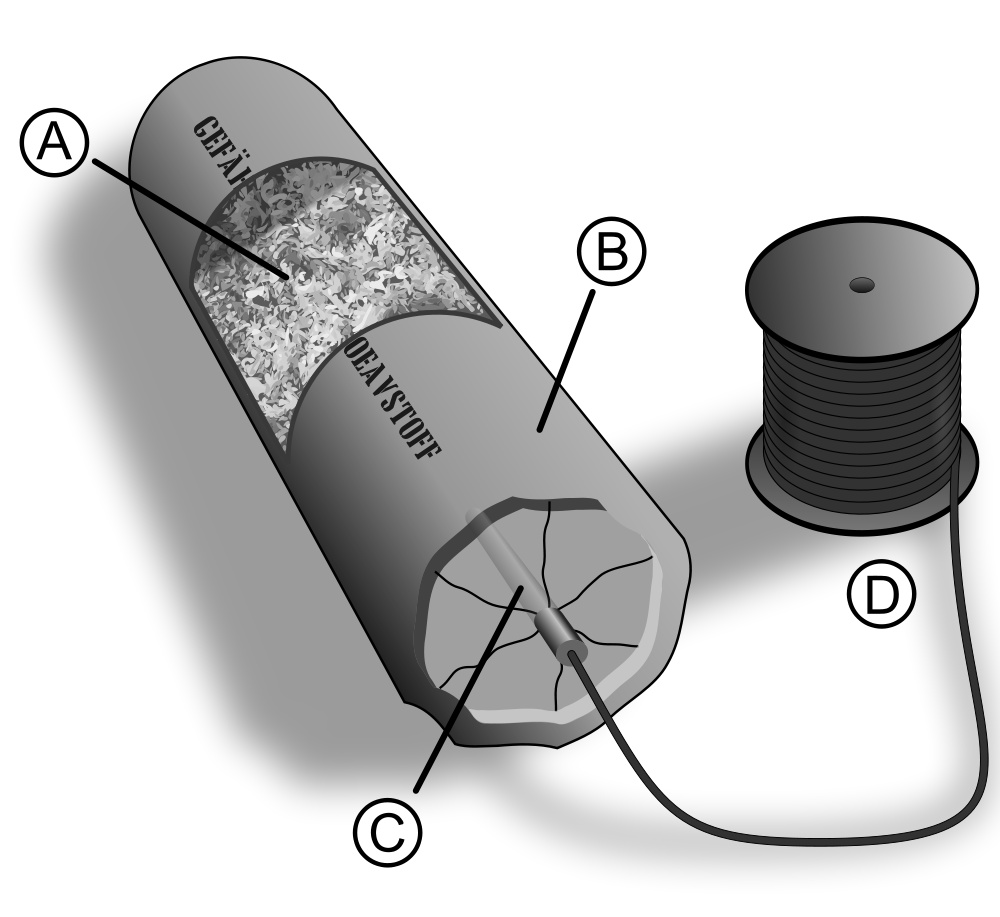
These are the fruits of “formal poetry”, I guess. Just being able to hold that level of emotional nitroglcerine steeped in multivalent word-play[1] [A] in one tiny package [B]. And then, needing only the blasting cap [C] of a reading or a by-hearting to detonate this universe of meaningful innerverse.

I think I first learnt about the notion of the “unreliable narrator” at the age of sixteen from my beloved O and A-Level English teacher Mr Baglow. I’m looking now to see if I might have used the term in my blog-post-sized essays I wrote on that neverending supply of A5 paper the comprehensive school system doled out to us - gratis (I didn’t)[2].

But I’ve grown bored with the idea since then. This poem reminds me of the psychological import of the unreliable narrator. Sometimes it’s just too painful to write, read, or listen to what the “reliable narrator” has to say. Often the reliable narrator sounds gauche or corny.

So let the unreliable narrator predicate and purport. Beneath the disingenuous bluster of “losing stuff is a doddle, my friends”, the wounded heart communicates what it needs us to hear.

Footnotes    (↵ returns to text)
  1. I love the possible allusions to mothers and fathers in the poem, without saying anything declarative. “Practice losing farther”, she urges us. But said aloud, this could also be “practice losing father”. Bishop claims to have lost her mother’s “watch”, the timepiece, but also perhaps the care and vigilance, the selfless holding-in-mind that we expect from parents and which they are not always able to give us?
  2. One of things I loved about Mr Baglow is that he gave me so many ego-boosting A-grades. I needed those ego-boosting A-grades, don’t we all? My Andrew Marvell essay though got a B and this comment: “I’m glad you wrote this, Steven. It highlights elements of your writing that should be avoided in AN EXAMINATION answer (I’ll see you about this). If you’d written this as ‘just another piece of work’ I’d have given you an ‘A’ for humour and perception.” This, in a nutshell: the power and enduring influence of a caring teacher.

“It seems we have said too little about the heart, per se” (First Footnote on Zoomorphism by John Burnside)

Nicholson Baker’s The Fermata is a comic novel about a man who has the power to stop time. Or rather: to halt the moment-to-moment ongoingness of people and events, an entity-fixing Pause button, leaving him unaffected, able to wander around in the now suspended animation of his life.

Baker’s novel came to mind recently as a kind of esprit de l’escalier thought after hearing J. recite from memory “First Footnote on Zoomorphism“.

The prosaic facts are these: J. and I are drinking Guinness. J. recites Burnside’s poem which she has decided to learn by heart. I find the poem moving, exciting, a concoction of “raw” and exquisitely “cooked”, as perfect as only a poem can be. I do not say this at the time, but communicate (as in bird vocalization?) through approving exclamations such as “bloody hell” or “wow”.

What I would like to do though is this.

Stop time.

Open J’s turquoise-covered diary where she has been keeping the Burnside poem, torn out of her London Review of Books.

Read it a couple of times.

Then, through a world turned stock-still, go for a walk. Past Daunt Books, onto Hampstead Heath, moving in the direction of Parliament Hill, ponds on either side of me, the poem nestling in my hand as I begin to commit it to memory.

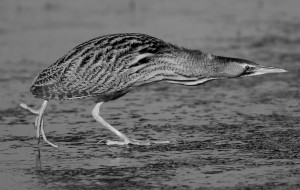
A few hours later I would return to our table at The Magdala, replace the poem in her blue notebook, maybe even pausing in my own memorising-momentum to jot down some questions bittern-booming in my head.

And then

…triggering time’s flow once more, vocalising these questions J-wards:

  1. What curtails our speaking about the heart?
  2. Why “grease”, why “echo”, in relation to our emotional life (we’re not talking biological cogs and wheels here, or are we)?
  3. Do you really think “any feathered thing will do”?
  4. If not, if one “feathered thing” is more interesting, more love-able, more exciting than another (which is obviously what I think), what are our criteria for this interest, love, excitment? How comfortable do we feel about these too-little spoken about impulses?
  5. Less-appealing to whom? To what extent do we feel our less-appealingness as a burden, or something shameful?
  6. What are our own, self-produced coloured lithographs (I think I know mine, do I?); what role do they play in our lives?
  7. Does “on the point” suggest that the transcendence we seek is out of reach, perpetually about to happen to someone else, somewhere else? Why not us?
  8. Is the poet mocking, mourning, or luxuriating in the notion that the imagination gives us access to an emotional intensity we might not attain in the non-textual here and now?
  9. If each heart is a unique species in itself, where to find one’s intraspecifc cohorts, co-hearts?
  10. Whose is the descant in the dark: the reader, the poet’s? (It is not the bittern’s, the bittern booms brassy, burpy, bass-like, a David Byrne/St. Vincent track.)
  11. Does the descant-to-disappearance sadden you (it does me)? Why?
  12. Why does the human imagination allow for these shapeshifting fantasies of zoomorphism? What happens when we project interspecifically/interpersonally? To what purpose?

Then it is only kindness that makes sense anymore (Kindness #3)

Learning poetry is a great pleasure, but there’s more. Something that goes beyond transient pleasure and moves into the inexplicably (or maybe explicably) salutary in a way that words fail to capture.

I almost want to use terms like “holy” or “sacred”, but I’m worried these might scare you away (they sometimes scare me away). In fact, whatever is happening, as profound as it is, is always happening within the body, not in some ethereal, extramundane godspace, but tangibly “here” in the mundanity of the moment.

I felt this last week in the hospital waiting to go under the knife. What a strange wait this was, the mind very quiet, stunned-quiet, not sure what to think or do. The books and magazines no use to me. So you wait with your peculiar, inward-flowering consternation for “your number to come up”.

I turned to my Waiting poems which I’d been memorising in the weeks before the operation and began to intone them to myself. Of course, as human beings we have been doing this for millions of years, calling it prayer or song. I’m not sure how many people have done this with a Falstaffian Lawrence Ferlinghetti poem (“and I am waiting for the Age of Anxiety/to drop dead/and I am waiting/for the war to be fought/which will make the world safe/for anarchy”) but the process was soothing nonetheless.

I also found Rogan’s ‘Across The Way‘ powerful in its reminder to take in the “others”, those sitting around me, literally across the way, my fellow impatient patients, also awaiting their surgical fate. All of us thrown suddenly into the embarrassment of our own physical imperfections, and ultimate mortality betokened by this place of sickness and death. Yes, health too. But mainly sickness and death.

What I found equally perplexing, but also incredibly moving, was just how much “kindness” I was able to find not only for others but for “me”. I’m sure this would not have happened if I hadn’t spent the week before committing to memory Naomi Shihab Nye’s poem.

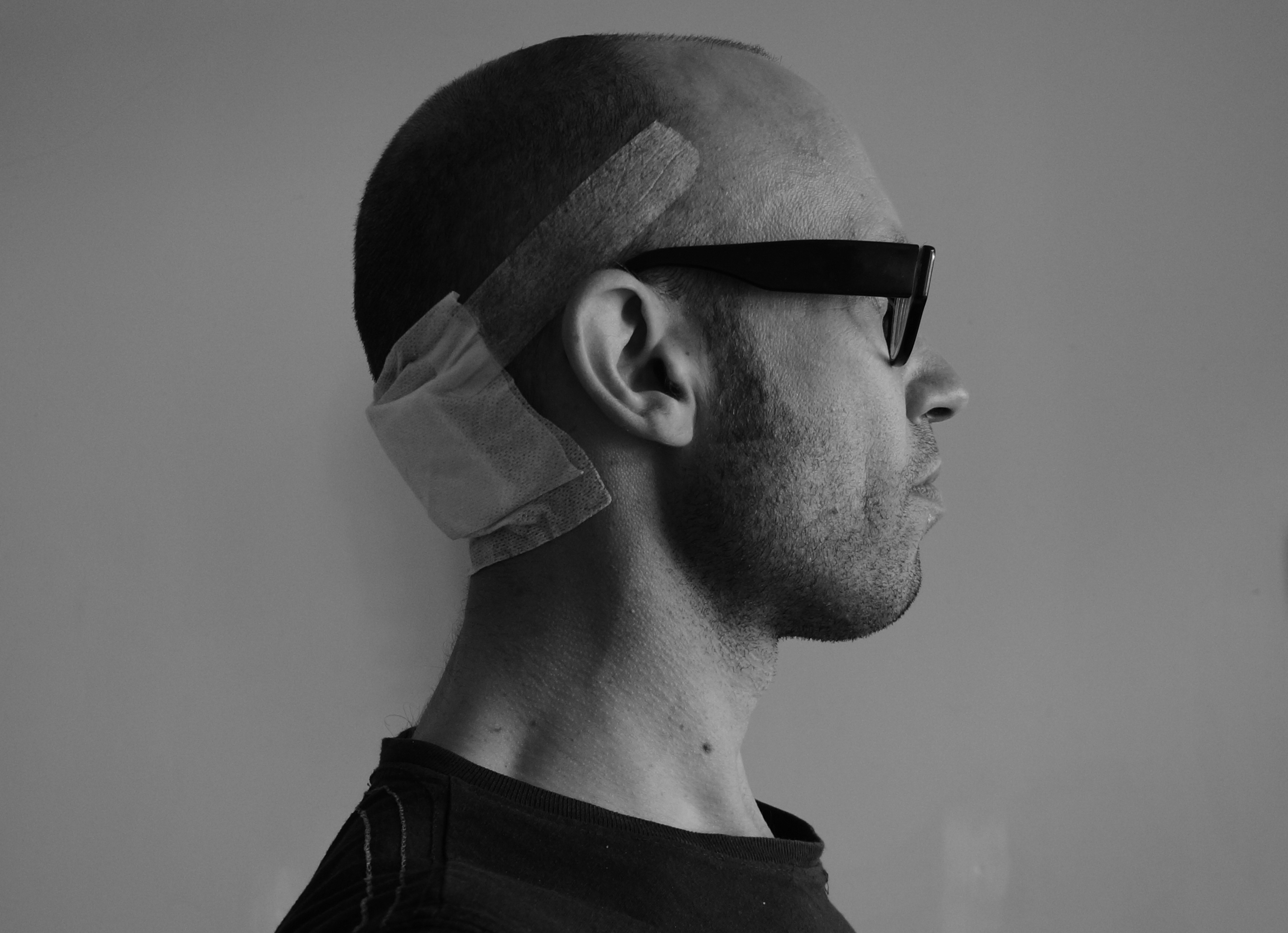
I had the operation done under local anaesthetic so there was a fair amount of pain and discomfort involved, and also the very surreal, almost Kafkaesque[1] feeling of being wide awake in the middle of that impersonal operating theatre with “professional” bodies bustling around the drama of that open wound at the back of my head. I was very aware of how perturbed and frightened some creaturely-aspect within me was at this point. But I also became aware of another part ministering to the frightened creature.

I’m not sure what this other part was exactly, but I do know that it felt relatively calm, relatively relatively wise, and quite kind. I have no doubt that it is this part of ourselves that we strengthen when we learn certain poems, or pray, or suffer in some useful way.

It’s as Mary Oliver says in that other old chestnut ‘Wild Geese‘ which I’ve almost committed to memory having heard it so many times in the “Mindfulness Circles” I inhabit:

You do not have to be good.
You do not have to walk on your knees
For a hundred miles through the desert, repenting.
You only have to let the soft animal of your body
love what it loves.

Damn those old chestnuts. So true, so true.

Footnotes    (↵ returns to text)
  1. I had recently been musing over Kafka’s ‘A Country Doctor’ and Will Self’s incredible digital essay on the story. Perhaps not the best of pre-surgical reading, as these images would unavoidably became part of the lived experience of surgery:

    On his right side, in the region of the hip, a wound the size of the palm of one’s hand has opened up. Rose coloured, in many different shadings, dark in the depths, brighter on the edges, delicately grained, with uneven patches of blood, open to the light like a mine. That’s what it looks like from a distance. Close up a complication is apparent. Who can look at that without whistling softly? Worms, as thick and long as my little finger, themselves rose coloured and also spattered with blood, are wriggling their white bodies with many limbs from their stronghold in the inner of the wound towards the light. Poor young man, there’s no helping you. I have found out your great wound. You are dying from this flower on your side.