They are begging us, you see, in their wordless way,
To do something, to speak on their behalf
Or at least not to close the door again.
Lost people of Treblinka and Pompeii!
‘Save us, save us,’ they seem to say,
‘Let the god not abandon us
Who have come so far in darkness and in pain.
We too had our lives to live.
You with your light meter and relaxed itinerary,
Let not our naive labours have been in vain!’
There is something especially wearisome about tasks that require a laborious repetition that stretches away into far future. When, as a youth, you leave education and take on that first serious nine-to-five job for example. Doesn’t everyone who experiences that particular right of passage get their first true exposure to the terrors of existential futility? The sudden realisation that, in return for an indispensible living wage, this relentless clockwork servitude now holds you forever. The merciless usury of life.
 In the state of depression this destructive philosophy can extend itself to everyday tasks – getting up, brushing your teeth, shopping, cleaning, answering the phone. Eventually your whole body is in riotous mutiny against you – demanding to be fed, cleansed and evacuated, itching, aching and twitching, while your mind, a cacophony, is permanently and horrifically conscious – a tirade of critical thoughts railing against your feckless ineptitude. Enough of the black dog.
It is a laborious repetition that we are called to in this final stanza. We should put aside the light jibe about the light meter and relaxed itinery and consider the full implication of acknowledging the pleas of the disenfranchised. The downtrodden, like the poor, will always be with us and to take on responsibility for their well-being is a serious and oppressive obligation.
The Walrus and the Carpenter
Were walking close at hand;
They wept like anything to see
Such quantities of sand:
“If this were only cleared away,”
They said, “it would be grand!”
“If seven maids with seven mops
Swept it for half a year.
Do you suppose,” the Walrus said,
“That they could get it clear?”
“I doubt it,” said the Carpenter,
And shed a bitter tear.
 Are the Walrus’ and Carpenter’s tears sincere? Or is their sorrow hypocritical? On one hand they are dismissing any thought of beginning the sweeping process themselves, on the other they are recognising the futility of even beginning such a task.
Are we similarly spiritually hobbled when we appease ourselves with a monthly direct debit to our favourite charity or react to the raw emotional implorings of some widely advertised disaster appeal with a financial contribution? Do we throw down a pound coin in the hat of a homeless beggar knowing it is likely to be spent on alcohol or do we donate to a homeless charity that is helpless in the face of such a tsunami of misery?
These are difficult questions because they dig at the heart of our own morality. Are our personal actions always self-serving even when they purport to be charitable?
Personally I believe the answer lies in the political sphere, rather than the personal one. We prefer this game of ineffective voluntary contributions and philanthropy because it by-passes our true responsibility. And that is t
 No such political party exists, or at least none of our political parties are prepared to place human rights as an issue above those of the economy, education, health, employment, housing and so on. Perhaps they are right not to do so, but I feel that their current justification for doing so is that the popular press would ensure that they were totally unelectable should they opt for making human rights the cornerstone of their political manifesto.o support and vote for a political party that will redirect re
sources from maintaining our comfortable middle class existence into policies that are truly comprehensive, encompassing all people and upholding the ideals of the International Bill of Human Rights which consists of the Universal Declaration of Human Rights (adopted in 1948), the International Covenant on Civil and Political Rights (1966) with its two Optional Protocols and the International Covenant on Economic, Social and Cultural Rights (1966).

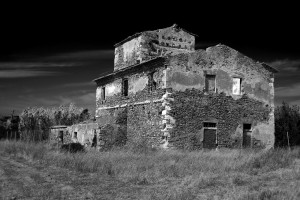
 I’ve chosen to learn the poem “A Disused Shed in Co. Wexford” by Derek Mahon.

 There have been deaths, the pale flesh flaking