Brief Reflection on Maps by Miroslav Holub #2

I’m not sure why it has taken me a number of months to learn this poem, but it has. Perhaps it has something to do with my none-too-stalwart diligence of late towards daily, even weekly by-hearting. The challenges of life take over, those very challenges which the learning of poetry attempts to address as well as offer respite. Before we know it we’ve stopped using that very thing which helps us weather the storm. It’s like that moment in the poem where it suddenly begins to snow:

At once
It began to snow, it snowed for two days and the party
Did not return. The lieutenant was in distress: he had sent
His men to their deaths.

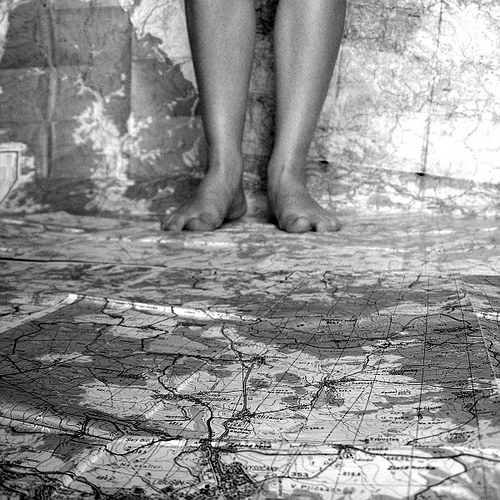
Of course, this is what this poem is also very much about. What to do when we feel ourselves trapped in the directionless sprawl of inner or outer “icy wastes”? We want the assurance that we’re moving in the right direction. We want some external or internal monitor giving us pointers and feedback. Like the experience of a treasure hunt at a children’s birthday party: “Cold, warm, warm, warmer, hot, YES!” But what to do when the feedback feels like this: “Cold, icy, gelid, Siberian”? It is at these moments, the moments of futility (“awaiting our end”) that we need maps.

Learning a poem is a map. First you remember one line, then the next. If you forget the line you’ve just learnt, go back and learn it again. Now stanza two. Turn left, go through the kissing gate across a paddock with sheep, over the hill until you reach a graveyard. Rest.
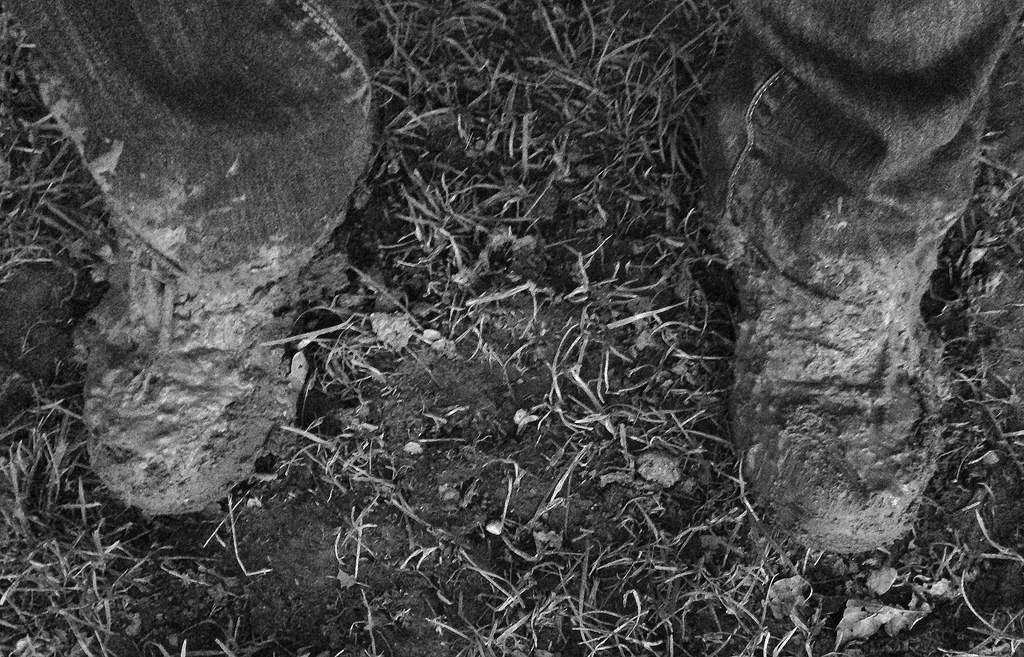
I am re-learning the poem on a walk. A very muddy walk. Mud too is an objective correlative for a type of “lostness”: a scuzzy, murky, sloppy kind of lost. The icy wastes have their painful, abstract immaculacy, whereas mud is simply (also complicatedly, reconditely, muddied-ly) primordial distress. I want to be following the “right direction”, but sometimes I get lost, up to my ankles in mud.

At this point it is good to have the poem, and its ironizing commitment to “the right direction”.

We made a bivouac, waited for the snow to stop, and then with the map
Found the right direction.
And here we are.

What is right? Right usually means something definitively conjectured, as in befittingly right, out and out right, unerringly right, right as rain. But right is also a feeling, and feelings regarding our status in life are capricious forces, all too dependent on mutable, unpredictable externalities.

So perhaps more important than the “right direction” is just a direction assiduously followed? For me that means coming back to my daily by-hearting of poems. I’m not necessarily setting this activity up as the “right direction” but it is a direction which has a feeling of rightness (also ripeness) to it. For in the learning of the poem, we open up different, often new directions in the mind which can help to give us a feeling of space. Not icy wasted space, or gloopy, muddy turmoil. More like small blocks of stepping-stone text on a page. We call this use of space poetry.

Hello.
Brief Reflections on Maps by Miroslav Holub #1

I’m all for New Year’s resolutions.

Equally: new month’s resolutions, new week, new day, new hour.

It is eleven am on a Saturday morning. I have faffed around since nine. At eleven, I made a new-hour’s resolution to write this. I am now writing this.

There is satisfaction in allowing some of the energy of the resolution to unbuckle me from the loop-de-loop of faff, to solve that most fundamental of existential questions: “What to do, what to do, what to do? Or even better: what to do now?” [C14: from Latin resolvere to unfasten, reveal, from RE- + solver to loosen; see SOLVE]

What would Jesus do? I haven’t a clue. What would a better-version of myself do? That, I tormentingly know. It is this better, more organised, intelligent, seasoned version of myself who makes all the resolutions, leaving the me-as-I-am to have to carry out his “Fix Yourself” diktat.

I think Miroslav Holub’s Brief Reflection on Maps is a good rejoinder and explicator to those who go “why bother” (I am one of those why-botherers, by the way).

It is for those who go:

“It’s futile. What you promise yourself, what you resolve to do will necessarily unravel through the inertia of willpower.”

“Why do you need a ritualistic date on which to draw a line? A line which says: from hereon in, I’m doing it like this, not like that?”

“I’ve tried in the past. It didn’t work. I’m giving up on the trying’thing.”

What does the poem say to all this? For me, it says: we absolutely need maps. We need our plans, statements of intent, objectives, Holy Grails, and (New Year’s) resolutions.

And, here’s the rub, it really doesn’t matter if these maps for future action completely make sense, either as comparative benchmarks to what other people are doing (“Stop making sense, Steve!” - thank you Dave), or as definitive goals. What does matter is that these resolutions, these plans, and intentions we draw up for ourselves on a yearly, monthly, weekly, hourly, minute-by-minute basis plug into something deep and essential within us.

In Holub’s poem, the off beam map “works” because it is a Something-To-Do, a Hope Project. We need these when faced with the icy-waste(ful) anxiety of a Nothing-To-Do, our Hopeless Projects. Being lost, awaiting our end.

Of course you don’t need to be lost and close to death in the Alps circa 1943 to have had that feeling, or to feel “reassured” when whatever resolution it is gets made and off you go in what you hope, at least for now, to be the “right” direction.

Are you doing that? Are you looking for maps on which your deepest human needs and values are imprinted? Maybe you’re not entirely sure what those needs are. If so, here are some worksheets I sometimes use with my clients (and myself). You can treat these like psychological maps, if you like.

Goodbye.

Kim Rosen recites me Something She Loves

“For many years, I was afraid of poetry. I felt as though it was a secret language that belonged to an elitist club, which I had not been invited to join. Though I loved poetry as a child, my experience in high school had stifled my spark….Twenty-five years later, in the midst of a suicidal depression, poetry poured back into my life, touching me in a way no spiritual or psychological teaching had been able to—literally saving me. The healing did not come through writing poems or even through reading them. It came when I discovered that taking a poem I loved deeply into my life and speaking it aloud caused a profound integration of every aspect of me—physical, emotional, mental and spiritual. I felt a wholeness I had never before experienced. I felt like I was flying. I was speaking the truth, and the truth was setting me free.” (Kim Rosen)

I’m sure we can all relate to this testimony. Whatever our relationship to poetry, many of us feel that we don’t really “get it”, or perhaps don’t really understand or want to make space for it in our lives.

But maybe we’ve been engaging with poetry in a way that is sterile, soulless, academic. The answer to “understanding poems”, but even more importantly to understanding ourselves, may lie in the act of mindful reading and reciting, at our own pace, getting those poems written onto our bones. Then perhaps beginning to speak them aloud: both to ourselves, as well as to others, sharing what we’ve discovered along the way.

Kim Rosen has taught me more about this than anyone else. You can listen to her reading me something she loves (a poem by Marie Howe) over here.

“Burn with me!” (King of The River #2)

The “right” poem (right being right for you, your distinctive antidote, your self-cure) will often take you places you might not want to go.

I did not want to spend over a month committing Kunitz’s poem to memory. I wanted my by-heart “possession” of the poem to be swift, fluent, uncomplicated. I would apply effort, link-begetting intelligence, creative-visualisations, whatever it took to get the poem into the spawn pool of my heart where it might swim around with all the others I’ve caught so far in this way.

Hear that?

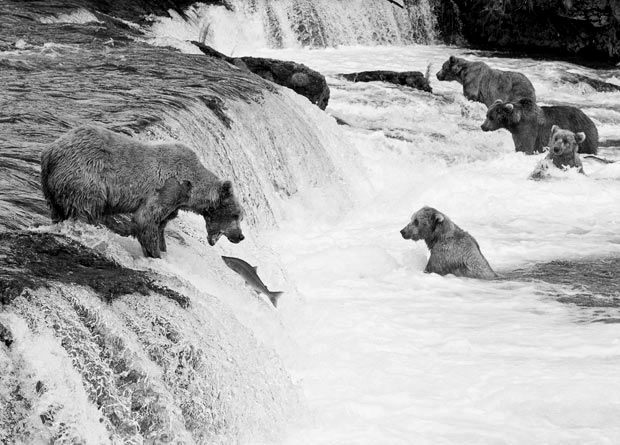
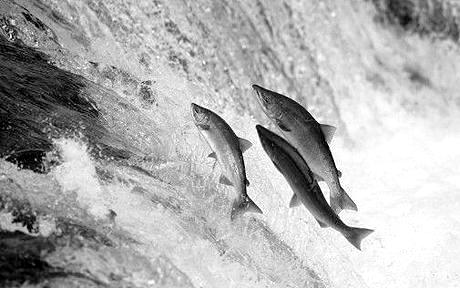
That is the sound of Stanley Kunitz chuckling. That is the sound of Stanley Kunitz saying: “The Sockeye salmon from central Idaho travels over 900 miles, climbing nearly 7,000 feet in order to return from the Pacific Ocean to the freshwater lakes of its birth, so that it may reproduce, and you want to consume this journey like you might consume a chunk of flesh hacked off the body of this creature? In what? An hour, a day, a week? Instantaneously?!”

I’m not sure if Kunitz was a cusser, but if he had been, I imagine him finishing his hard-nosed but good-humoured observation with “…for chrissakes, Steve, is that really the deal here? Jesus Christ!”

Each section of Kunitz’s poem is built around an uncomfortable truth, a truth we all struggle with: that things are not as they should be, that life bears no responsibility in providing us with the ideal. If A were clear enough, if B were still; if C was given to me; if D was granted; if E were pure enough.

But (alas): A is not clear, B is not still, C is not given, D fails us; E is not pure.

What do we do with all these (k)nots?

The poem was one giant (k)not: no matter how hard I tried, it just didn’t want to swim into my head. I would spend hours memorising - even just ten or twelve lines, a few hundred slippery word fish, which before I knew it, had slapped and thrashed and tumbled their way out of my memory again. The process felt like snakes and ladders, but all snakes, no ladders. I worked hard at getting stuck into the poem, but all I did was get stuck in the poem. I couldn’t move forward at the pace I wanted, I needed, I’d hoped for.

Why?

I don’t know. Maybe just “because”.

Because this by-hearting process is not clear, not still, not given, often fails us; not pure. No, that’s not true, purity it has: the purity of utter bewilderment and incapacity.

So what did I do?

I continued.

In the words of Frank O’Hara:

the only thing to do is simply continue
is that simple
yes, it is simple because it is the only thing to do
can you do it
yes, you can because it is the only thing to do.

We know this, but then the next question is maybe why does one continue?

The answer to that question is I think deeply embedded in this poem. It has something to do with following one’s vital impulses, with passionate struggle, with Csíkszentmihályian ”flow“.

And a kind of faith too.

I knew I’d crack the poem if I just kept on returning to it again, and again, and again. Again (obdurately), again (tenderly), again (patiently).

The faith was also about knowing that the journey would be worth it.

It has been.

And like this insubstantial pageant faded…

Mother and Child 'Tuahutama & Mutchiluca'One of the more interesting cultural initiatives that came out of the £9.3 billion splurge of the Olympics, was a week of pop-up Shakespeare in which undercover actors “ambushed” shoppers and tourists in Covent Garden with chunks of the bard.

A woman stops you in Covent Garden to ask for directions to a restaurant you’ve never heard of. In the midst of confessing your ignorance she remarks:

O, what a noble mind is here o’erthrown!
The courtier’s, scholar’s, soldier’s, eye, tongue, sword,
Th’ expectancy and rose of the fair state,
The glass of fashion and the mould of form,
Th’ observ’d of all observers- quite, quite down!

I love the idea of this. So much so, I wish they’d taken all £9.3 billion of our taxes and instead of sinking it into an orgy of patriotism, unleashed thousands of actors, each one bursting with 100s of memorised monologues and poems, onto the streets of every town, city and village in the UK for a whole year. Or even ten years. £9.3 billion would pay 10,000 actors 100,000 pounds each. (Ten grand a year is “doing well” if you’re an actor.)

Now the Olympics were Whizz! Bang! Wallop! FAB! but they weren’t that whizz-bang-wallop. A ten-year, 10,000 actor job-creation scheme, that would have been something worth crowing about.

The reason I’m rambling on about Shakepeare is that I’m learning a monologue at the moment, a monologue which I’m planning to produce next week in the same pleasurably disconcerting way as Mark Rylance’s popper-uppers.

This be it, from the last Act of The Tempest:

Learning these lines has been a reminder of just how damn good Shakespeare is. Do we need to remind ourselves from time to time just how good WS be? Yes we do.

At some level, as a culture, we take him for granted. Some of his most memorable lines now sound to our ears like the most hackneyed of Beatles’ songs. When was the last time, if ever, you had a listen to Let It Be, or All You Need Is Love?

But around and in between the over-familiar lines still lies so much magic and wonder.

What I love about this “poem” is that through Prospero, one can unleash what amounts to an existential howl at all this useless beauty, this human-despoiling desecration of the world and our weirdly inconsequential place in it. And yet the visceral rage and sadness of the sentiments sit mercifully “contained” in the iambics of the verse, like a small child wrapped in a Khanga, a Bilum, a Rebozo, or any of the other baby-carriers that preindustrial women use(d) to keep their infants close.

What you get when you learn Shakespeare in this way, is catharsis without injury to the self or to those you love. Psychic-bloodletting with no attendant shame or ego-destabilisation. Surely the Holy Grail of therapeutic intervention, the Nirvana of a good emote?

Shakespeare’s plays are packed with these experiences. All yours as long as you’re willing to put in the memory-work.

Here’s a great website for finding the one you need: http://www.shakespeare-monologues.org/